
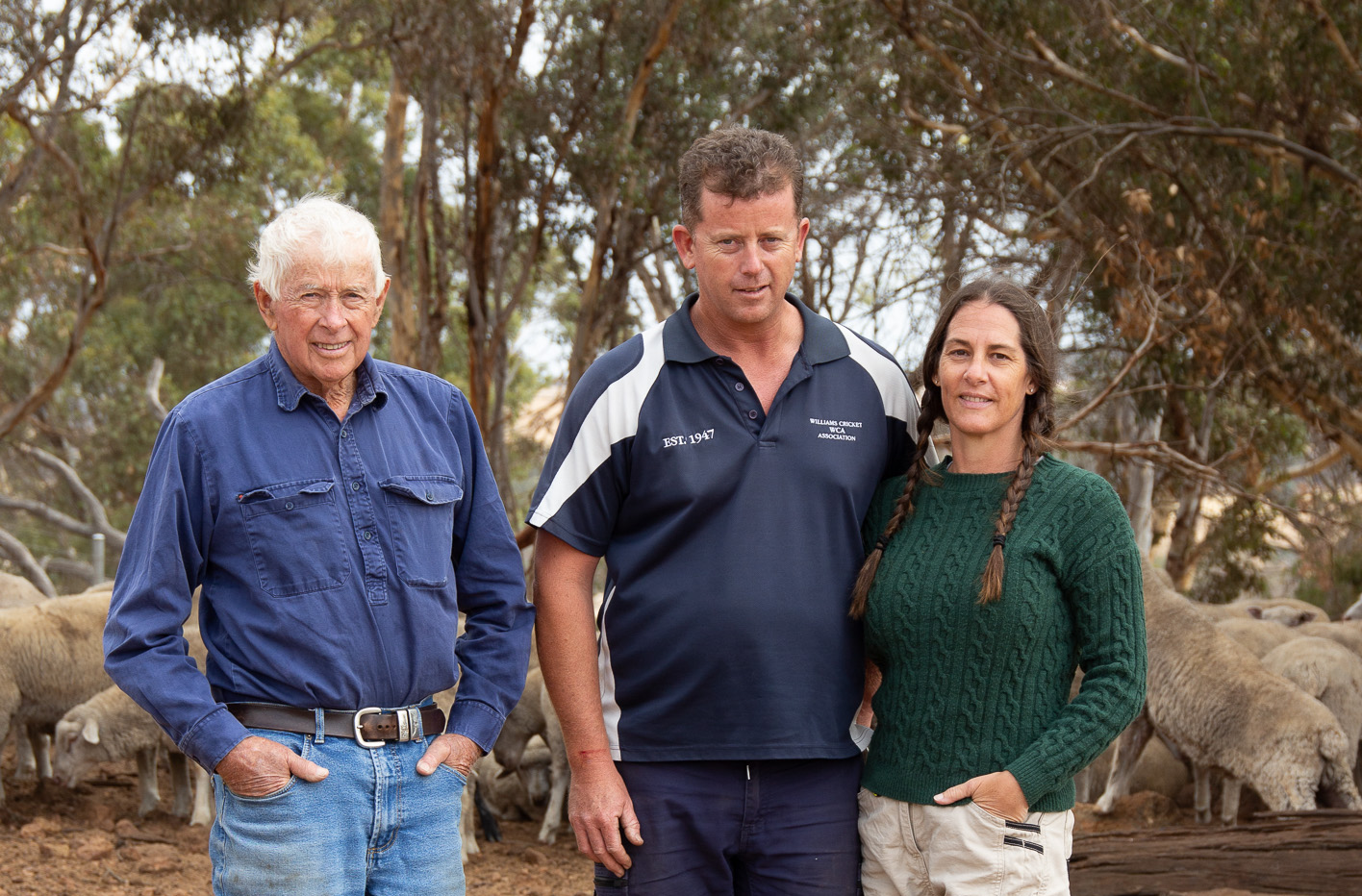
Using existing stubbles and a simple feeding system, the Johnstone family has reintroduced sheep into their operation, achieving strong and consistent growth rates in a short finishing period, while turning available feed into a practical, profitable outcome.
When Lewis Johnstone compares the family’s return to sheep to an episode of Clarkson’s Farm, he is only half joking. Around the place, everyone has been assigned their role. However, unlike television, the decisions on farm come back to one thing, whether the numbers stack up.
For the Johnstone family, bringing sheep back into the business was not about returning to tradition. After more than 100 years as a family operation, the shift was based on what made sense within the current system. As the farm had moved further into cropping, sheep had become less of a focus. What changed was a combination of trading experience and improvements in sheep genetics, which made finishing lambs a more practical and worthwhile option.
The property, established around 1912, had long operated as a mixed Merino and cropping enterprise, before the breeding flock was sold in 2000. Since then, the business had focused on cropping, supported by some opportunistic sheep trading.
In 2015, Lewis was diagnosed with Parkinson’s disease. The family continued farming for several years, before leasing out the cropping program in 2023. While this was initially driven by practical needs, it also created the opportunity to slow things down, focus on improvements across the farm and reassess how existing resources could be used more effectively.
With stubbles available and sheep prices favourable, finishing lambs presented a logical opportunity that aligned with the way the business was already operating. It also suited a more flexible approach, built around time and existing infrastructure rather than scale.
The system itself was designed to be straightforward and to fit within the existing operation. Store lambs between 28–38kg were sourced through saleyards and private channels, then run across stubbles, before entering a finishing phase. Lambs were shorn in early December, vaccinated for clostridial diseases and treated for internal parasites ahead of feeding. From January, they were introduced to Easy2Gro LM pellets through a self-feeder fora controlled 22 day feeding period.
Because the infrastructure and feed base were already in place, the program did not require significant additional investment or complexity. It allowed the family to make better use of what they already had, while maintaining flexibility within the broader farming operation.
Performance from the first group of lambs was strong and consistent. Lambs entered the feeding period at an average of 43kg and finished at 56kg over 22 days, achieving average daily gains of more than 500grams. Intake averaged around 3kg per head per day, supporting steady and efficient weight gain across the mob.
Beyond the growth rates, the consistency of the result was a key outcome. The feeding program delivered reliable performance, reinforcing the role of a well-balanced ration in supporting efficient finishing. Easy2GroLM is formulated to support rumen function and fibre digestion, helping lambs make better use of the feed they consume and convert it into weight gain.
One of the key learnings from the program was the importance of how feed is viewed within the system. Higher intake levels can initially seem excessive, however, when measured against weight gain and sale value, there turn becomes clear. The results highlighted the value of investing in nutrition, particularly during the finishing phase where performance gains can be realised in a relatively short period.
The experience also reinforced the relationship between genetics and nutrition. While genetics set the potential, nutrition plays acritical role in achieving it. Without the right feeding approach, that potential is not fully realised, making feed a key driver of overall performance.
Looking back, the outcome was not the result of any single factor, but a combination of getting the fundamentals right. Good quality lambs, effective use of stubbles, access to clean water and shade, along with a consistent feeding system, all contributed to the result. Attention to these areas created the conditions needed for the feeding program to perform.
A second group of lambs is now in the system, with the flexibility to adjust feeding duration depending on market conditions and target weights. The approach remains practical and responsive, with decisions guided by performance and current pricing.
For the Johnstone family, sheep are now part of a system that is focused on making better use of available resources and responding to current conditions. Rather than returning to the past, the enterprise reflects a considered and practical approach to improving overall farm performance.
Talk to Milne about your finishing program
If you are looking to improve feed efficiency or get more out of your finishing system, speak with the Milne team about how a targeted feeding approach can support consistent, reliable performance.
Call Paul Nenke on 0407 720 040 for more information.


