
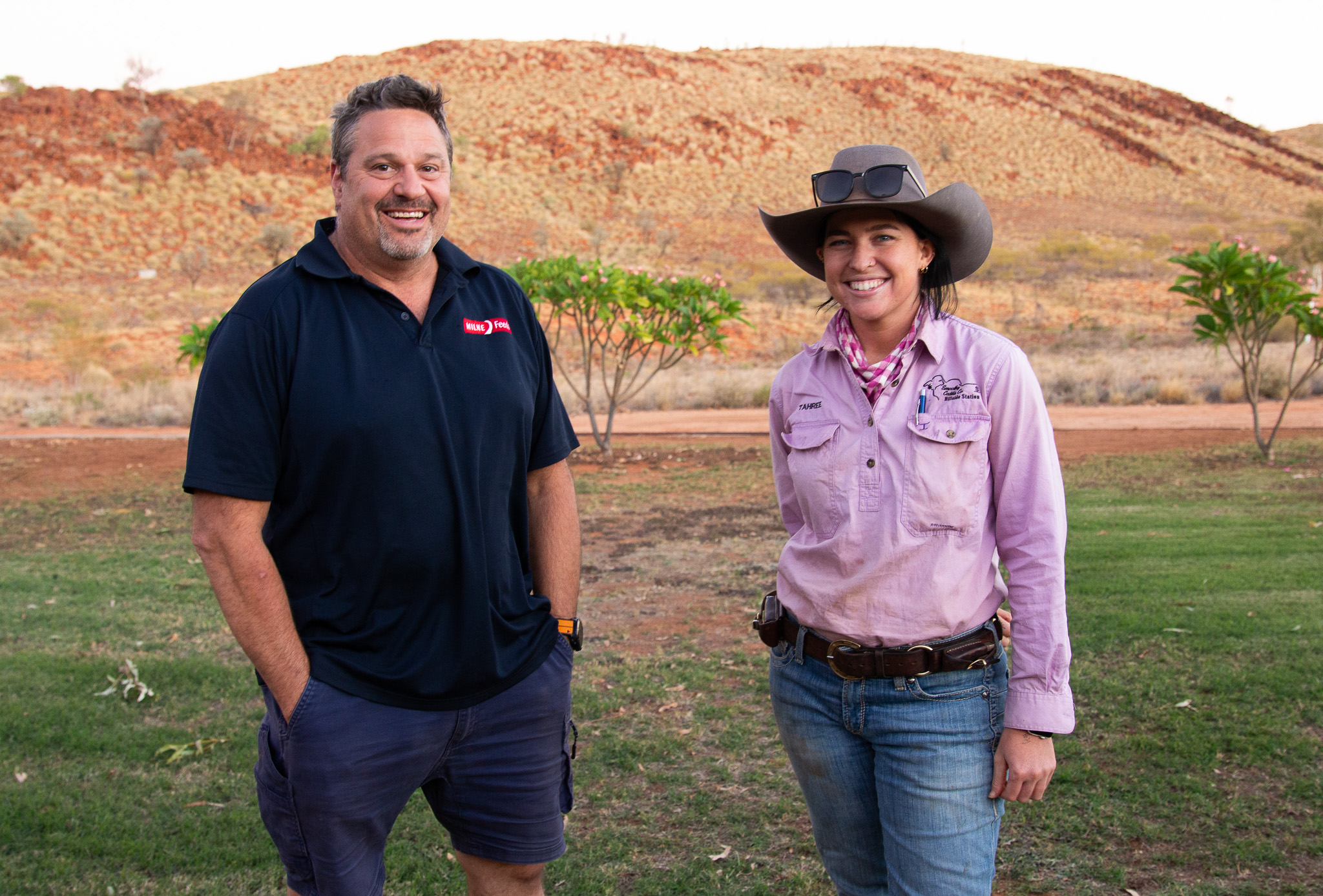
Hillside Station is part of Brent Smoothy’s Smoothy Cattle Co, and its job is a specific one: get Pilbara-bred weaners to Queensland trucking weight before the wet season closes the window. Miss that window and cattle stay through the wet, adding pressure on pasture, pushing up feed costs and stretching the labour budget. It’s a tight timeline and getting weaners performing from day one matters.
Tahree Kammann, one of Hillside’s management team, launched the trial to explore exactly that question. Working through PEN and PIP, she set out to understand how hay quality and mineral supplementation influence early growth rates, rumen development and how well weaners transition back to paddock. Seven mobs totalling 290 head, joining the trial at between 90 and 145kg, were allocated across different treatment groups, with uninterrupted access to hay, pellets and water throughout.
What Tahree found challenged a common assumption: starting weight alone does not predict how a weaner will perform. Calves with better rumen development at weaning showed more consistent, sustained growth. In contrast, lighter, less rumen-developed animals showed far more volatile weight trends, with some gaining modestly, some stalling and others losing weight altogether. Rumen maturity, the trial concluded, is a stronger predictor of long-term growth potential than the weight a calf walks in at.
For Milne, seeing Early Weaner included in the feeding program throughout the trial reinforced what the product was designed to do. Early Weaner was developed specifically to support young cattle through the transition from milk to solid feed, encouraging consistent intake from the outset and providing the nutrition needed to support rumen development during this critical window. A well-functioning rumen underpins everything that follows, more efficient use of feed, better recovery from handling events and stronger performance through backgrounding and beyond.
Tahree was candid about what made the trial work on the ground. Consistency was non-negotiable: correct drafting, accurate pen allocation and making sure cattle had uninterrupted access to feed and water throughout. “The importance of timing was reinforced,” she noted, running a trial between mustering and trucking windows demands careful planning and clear non-negotiables. Those operational lessons are as valuable as the data itself.
Producer-led work like this, grounded in real station conditions and shared back through networks like PEN, is exactly how practical knowledge builds across the industry. Milne is proud to support producers like Tahree who are asking the right questions and putting in the work to answer them. We remain committed to developing feeding solutions that work in the real conditions producers face, season after season.
To read the full MLA article, visit the MLA website.


