
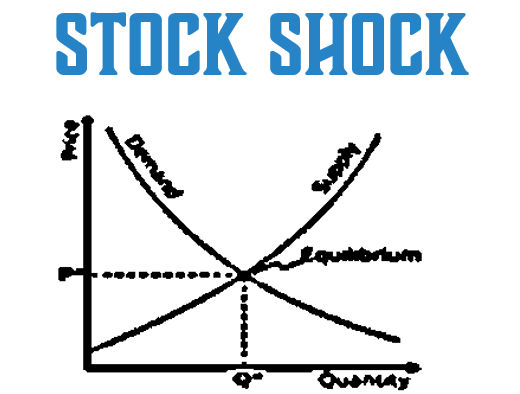
Grain analysts love nothing more than droning on about global wheat S&D (that’s Supply and Demand for the acronym‑intolerant). Millions of tonnes of production up here, millions of tonnes of consumption down there - on they drone like Buddhist monks in a temple. The numbers are so enormous they make any single production region look about as influential as a lone pigeon at a CBH site.
But global “stocks” are not one big communal wheat pool that any flour or feed mill can dip into. The wheat trade is fragmented, politicised, freight‑limited, class‑specific and tariff‑distorted - where only the fraction that escapes the hungry hordes of domestic buyers ever makes it to export channels to begin with. The global market is more a collection of regional S&D tug‑of‑wars.
This is why most global S&D reports shove China into the irrelevant column. China produces well over 130 million tonnes of wheat annually and could hold more than 120 million tonnes of stocks (though no one outside the Great Information Wall of China can verify this). But none of it matters to global trade because:
But China can’t be ignored entirely - focusing only on supply is literally the definition of being one‑sided. China’s demand matters too.
China imported around 12 million tonnes of wheat in 2023 and 2024, making it one of the big three importers (along with Egypt and Indonesia). But in 2025, imports fell to just under 4 million tonnes. That’s an 8 million tonne hole in the “D” side of the ledger – or almost all WA’s forecast crop this year. And China could theoretically import nothing for a decade by drawing down reserves - or turn around and import 15 million tonnes next year. It’s as predictable as a coin flip.
Meanwhile, on the “S” side, we have Russia - the world’s largest individual wheat exporter. Russia’s wheat exports, typically 45–50 million tonnes per year, are the bedrock of global trade because they are usually the cheapest going around.
But “freely traded” it is not. Russia (like China) loves a good market intervention. Export taxes, quotas and minimum price thresholds get thrown around willy‑nilly to keep their populace as far away from revolution as possible.
As an added bonus, the Ukraine war has brought sanctions - not directly on wheat, but on the systems and organisations that support the sector - making exports harder.
However, all of that pales in comparison to the recent physical destruction of supply chain assets: ship loaders, silos, vessels, even labour. Ukraine, another big wheat exporter, has suffered the same fate. This adds a 50‑point bolded footnote to the S&D numbers: it doesn’t change the level of stocks; it simply prevents their accessibility. Wheat is piling up in silos, sheds, fields - anywhere it can – as those that want it, can’t get it. In August, exports were down 60%. That is not spare change.
Now things get interesting. Unlike China’s stocks, Russia’s stocks cannot be discounted. They will eventually find their way to the global market. The market just doesn’t know when, and that makes pricing precarious.
Physical wheat does not flow like its associated purchase contract, which zips through fibre‑optic cables from Jakarta to Perth in seconds. Wheat stubbornly complies with the laws of physics and must be dragged by truck, train and ship over vast distances - which is expensive, constrained by supply chain capacity, and typically takes months from go to whoa.
That means market exposure. Buy now, and you risk Russian stocks suddenly reappearing and your vessel is out-of-the-money by several million before it even leaves port. Buy later, and you are fighting with every other mill in denial for that last unsold batch of Argentinian wheat that arrives two months after you need it.
But importers are slowly being drawn to an undeniable fact: the Black Sea supply chain, even once safe from attack, won’t immediately return to its former capacity. It will dribble before it surges, and lost capacity won’t be rebuilt in excess of baseload volumes to clear the backlog.
As importer stocks get squeezed, the best source becomes the closest source. Time is not on a miller’s side when sifting through the dockage at the bottom of silos. And it just so happens that WA is the closest wheat export origin to Asia. A vessel transiting from Geraldton to Indonesia in just a week may save a mill from dropping shifts. But the crux is that they’ll need to pay up to get to the front of the queue - and that means price pressure.
If that’s not enough to excite WA wheat farmers, there’s a S&D wildcard. Russian wheat is around 70% winter wheat. It must be sown in autumn - i.e., now. Every farmer knows successful seeding requires inputs, working capital, equipment and labour coordinated into a narrow window of optimal sowing time. In Russia’s case, all four are constrained by war. Something as simple as the fertiliser shed being full of unsold grain - grain sales that would normally fund the fertiliser - is bogging down next year’s crop potential.
The next month will be analytic heaven for the S&D droners. If a material proportion of Russian wheat is not sown, it cannot be grown, no matter how good or bad the season or how improved next year’s supply chain might be.
Keep an eye open for WA growers nervously checking the morning wires for news of Russia's “S” issues continuing and the level of China’s “D” appetite (as you fill up with hideously expensive diesel in the regions -another S&D story).


