
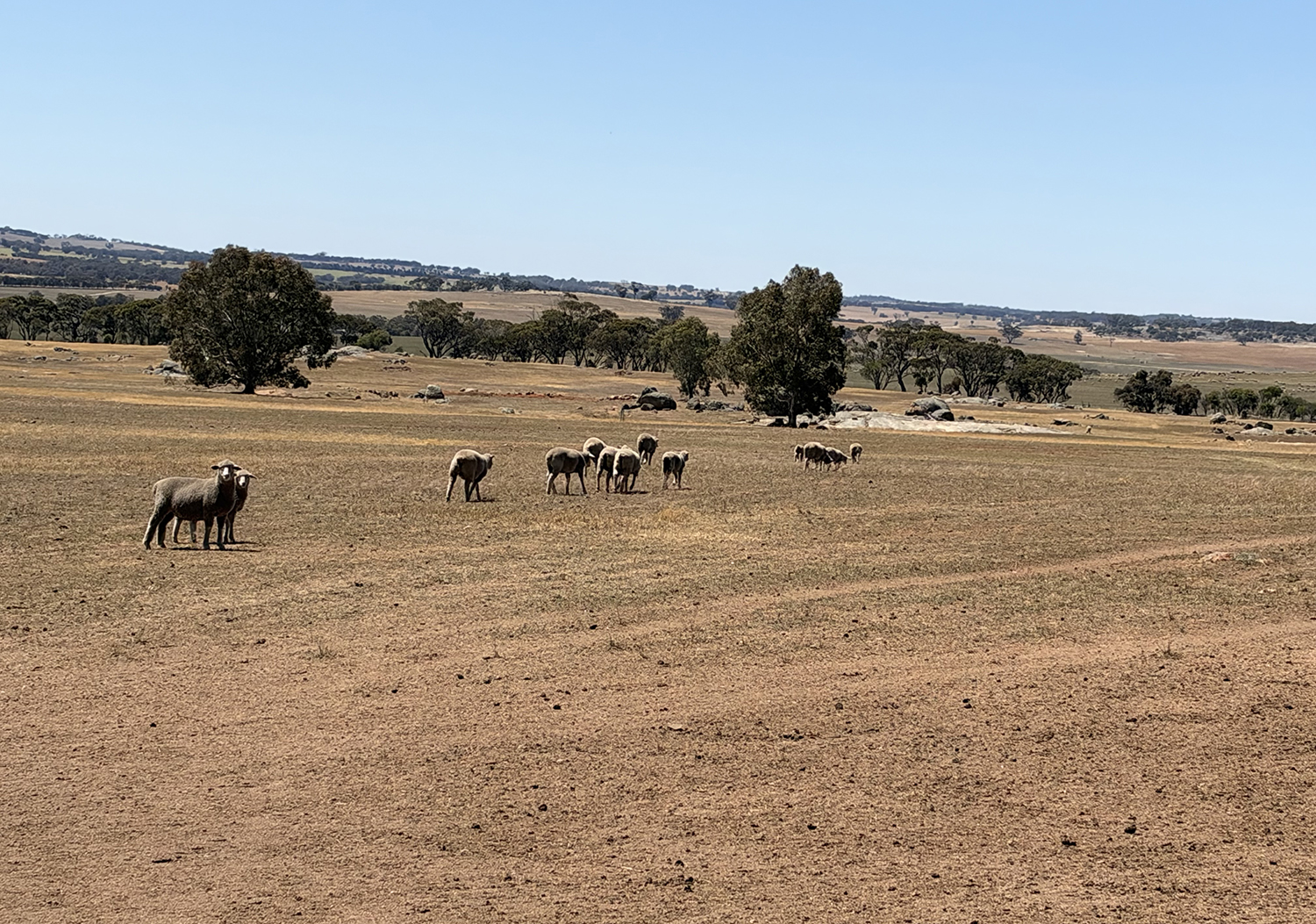
If you run sheep or cattle in the southwest, you didn't need the weather bureau to tell you this year was dry. You've seen it in the paddocks.
By now in most years, we'd be watching clover and ryegrass race away. Ewes would be filling out, lambs would be growing on their mothers and on green pick, and the back paddocks would be banking dry feed for summer. That's the spring flush, and most WA sheep businesses are built around it. Lambing dates, stocking rates, weaning and turnoff all assume it turns up.
This year it didn't.
The good news is the market is strong
If there's a bright side, it's prices. The WA flock is a lot smaller than it was, buyers are hungry, and good sheep are making serious money. In July, a Pingelly line of Merino wether lambs made $418 a head at Katanning Sheep Sale, a new state record. Earlier in the year, prices were running 65 to 195 per cent above where they were twelve months before.
Read the sale reports closely, though, and there's a catch. Buyers are paying for weight and finish. At Katanning on the 7th of October, good heavy new-season lamb stopped at $270, while store lambs under 18 kg carcase went for anywhere from $90 to $202. Boner ewes made $70 to $162; heavy ewes made up to $230. And when the market softens, the light stuff drops first. In late July, light lambs eased $20 to $50 a head in a single week.
That's the trouble with a dry spring. Everyone's short of feed at once, so everyone's sending light sheep to the yards at the same time, and as we know, condition is king.
The true cost of light sheep
Here's what that looked like in the pens at Katanning.
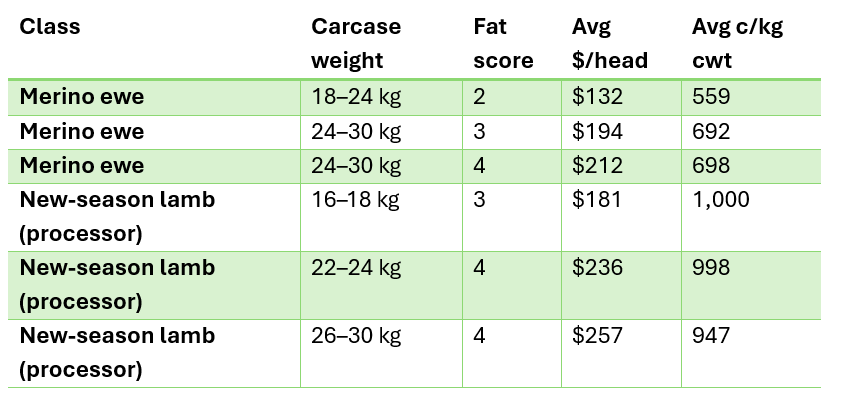
Look at the ewes. A light, fat score 2 Merino ewe made $132, or 559c/kg. Put about 5 kg more carcase and a bit of condition on her and she made $194 at 692c/kg. She's not just heavier; she's worth more per kilo too. Across 1,000 cull ewes, that's around $62,000.
Lambs are simpler. The rate held at about $10/kg whatever the weight, so it comes down to kilos. A 17kg lamb made about $181 and a 23 kg lamb about $236. Six kilos of carcase across 1,000 lambs is roughly $55,000.
And it doesn't stop at the saleyards. Ewes that stay light into autumn join in poor condition, and that means fewer lambs next year. Light weaners grow slowly and take longer to reach specs. Leave a dry spring alone and it turns into a smaller lambing and a lighter turnoff in 2027 and you are losing money.
Where we come in
This is the situation our pellets were made for.
Our new mill, commissioned last November, has doubled our capacity meaning we can meet the needs of the WA livestock industry, even in a dry year. We also have 14 depots between Geraldton and Esperance, so for most of farmers feed is less than 100 km away. Plenty of those depots sit on farms just like yours, with farmers who understand what you require.
Our depots carry Milne Feeds targeted feeding solutions: EasyOne® and Easy2Gro LM™. EasyOne® is a 9mm pellet that delivers 11.0 MJ/kg of energy and 14.5% protein. Ideal for trail feeding, it provides essential nutrients for ewe maintenance, lactation and lamb growth. Easy2Gro LM™ is a high-energy, 6mm pellet, designed for optimum growth in lambs, delivering 11.5 MJ/kg energy and 15.5% protein. Both feeds contain Milne’s unique Hyfibe® technology to promote rumen health and reduce the risk of acidosis.
To help beef customers this year we have stock of our fibre pellets, ideal as a hay extender, ready to go at the Milne Feeds Katanning depot. For more details call our Beef Sales Manager Jonno on 0407 766 444.
Swaps and Offsets
Our swaps and offsets program make it even easier to access our pellets. If you've got grain in the shed or off the harvester, you can bring wheat, barley or lupins to Welshpool and take pellets home, paying only the difference as an offset. Or our Grain Trades, run through the CBH bin system via LoadNet, are another great way for producers to guarantee their pellet supply and price. Contact Paul Nenke at Milne Feeds on 0407 720 040 to arrange a grain trade, then nominate the grain on LoadNet, pick which depot and slot you want for collection, and collect your pellets during your slot period.
Why we think it's the right call this year
A home-mixed grain ration must be introduced gradually to reduce the risk of acidosis. It also requires added roughage and minerals, plus time for mixing and trail feeding. Pellets are consistent, safe to introduce and simple to use: fill the feeder, then get back to the rest of the job. Time is money—and who wants to stop the header to spend a day mixing grain rations?
With lambs worth about $10 for every extra kilo of carcase, a feed that turns into kilos efficiently pays its own way.
First, get condition scores and weights on every mob and do a feed budget out to the break. Then rank them. DPIRD's advice is that mature breeding ewes come first, followed by weaners.
Start supplementing before condition drops, because it's far cheaper than putting it back.
Plan your needs with the local depot or speak to National Sales Manager, Paul Nenke, to secure your volumes now, before the summer rush.
The flush didn't come this year, but the market is still there for sheep with weight and finish on them. Condition. Is. King.


